Rental Loans — A Smarter Way to Finance Your Next Investment Property
Temple View Capital's DSCR Loan Program is built for real estate investors focused on rental properties — a loan that qualifies on the property's cash flow rather than personal income documentation. Flexible terms designed around how investor portfolios actually get built, competitive rates, and the certainty of execution operators need to move on the right deal in a market where speed and structure both matter.
Are Cockroaches Lurking in Real Estate Direct Lending?
By Jan Brzeski, Founder, Sage Credit Investment Partners
Commenting on several high-profile bad loans in private corporate credit, JPMorganChase CEO and Chairman Jamie Dimon recently warned that "when you see one cockroach, there are probably more." Although real estate direct lending has gotten less attention than corporate private credit in the current cycle, it is worthwhile to consider some leading indicators for trouble.
When borrowers and lenders wink at each other, watch out
A recent trip to North Carolina gave me pause. I met a homebuilder selling 7–8 entry-level homes a month under $300,000 across central NC. Strong demand, sound model.
The problem isn't him — it's his lenders. Some are offering 90% financing, with a few loans approaching 100% of project cost. Borrowers are quietly coached that they can get even more leverage if they pad their construction budgets, and originators sell this as a feature. It rhymes with the pre-2008 game of musical chairs: everyone knew it would end, nobody wanted to stop the music. This niche is too small to threaten the broader economy, but when borrowers are being guided to mislead their lenders, something is off.
A 95% loan-to-cost loan has no margin of safety
Lenders defend these loans by pointing to experienced borrowers whose finished projects pencil out to a 70% loan-to-value. Fine in theory. But if the borrower stops executing — say, a health issue — the lender can't realistically take over dozens of half-built homes and recover the full loan.
So why does this niche get leverage that apartment buyers and shopping center developers (typically capped around 75%) never see? A few reasons:
Low historical losses. True, but home values haven't meaningfully dropped since this niche emerged post-2008, outside a few Texas and Florida cities.
Houses are liquid. Plenty of buyers, both investors and owner-occupants.
Wall Street loves RTLs. Residential transitional loans have become bond fodder. Once the securitization machine starts humming, standards drop to keep it fed — and bankers paid.
High-leverage fix-and-flip loans: what comes next
The credit cycle is predictable in shape and unpredictable in timing. Standards loosen, then tighten. The question is always when.
Securitization is where the swings show up first. Think of it as cartilage between slow-moving private markets and the instantly emotional public ones. The window stays open for months or years, then slams shut in days. We saw this in 2008 and again after Covid.
When it slams, the most aggressive lenders — the ones living off cheap Wall Street financing rather than their own balance sheets — stop originating overnight. The disciplined players left standing get to reset terms. We don't know what triggers the next reset. We only know there will be one.
What rational investors can do now
Keep a margin of safety. Require real borrower cash. Not every developer wants 100% financing — some have learned that all-leverage careers come with brutal highs and lows. Lending to the slow-and-steady ones often beats chasing the cowboys.
Be willing to grow slowly, or not at all. Capital is plentiful and the temptation to deploy it on whatever terms are available is real. But the same logic that rewards patient developers rewards patient lenders.
Hunt for overlooked niches. Howard Marks calls it second-level thinking — looking past what everyone already sees. North Carolina is growing fast and a great place to live; but with some homebuilder borrowers being handed near-100% financing, there is real risk for whoever ends up holding these loans. The market is wide. There's almost always a "best available strategy" — a corner where you're paid for the risk you're taking, even when the rest of it is frothy.
What's the overlooked niche you'd point to right now?
Jan Brzeski is the founder of Sage Credit Investment Partners (SCIP). To learn more about SCIP, text him at 310-428-9109 or email contact@scipfinance.com.
Liked this read?
Subscribe to Jan Brzeski's LinkedIn newsletter
Get Observations straight from Jan when he publishes — disciplined, operator-first thinking on private credit and real estate direct lending, delivered to your LinkedIn inbox.
By Jan Brzeski, Founder, Sage Credit Investment Partners
Every lending business runs on two ingredients: capital to lend and borrowers who need financing. When lenders fail, it is because one or both have dried up. Below are some of the leading challenges that trip up non-bank lenders, whether they make loans on real estate or any other type of assets.
Bad loans
One thing I appreciate about investment management is that the score is always on the scoreboard. Every lender eventually takes losses — the question is whether those losses are survivable across a full real estate cycle (typically ten years or more).
A bad track record is like a car that has been through a major crash: impossible to hide, and hard to sell. The single most common reason a lender goes out of business is that investors lose confidence in the leadership team’s judgment. Once that confidence is gone, capital stops coming in.
Poor liquidity mismanagement
A lender can fail on liquidity even when its loans are performing. The causes are varied: expected payoffs get delayed; a fund faces a wave of redemption requests; origination volume outpaces available capital; a credit line gets called; or a construction lender fails to plan ahead adequately for construction draws.
Fund managers need to plan for a wide range of scenarios. Open-ended funds — frequently preferred by wealth managers for income-oriented funds — make this harder than closed-end structures, because redemption timing is unpredictable. Institutional investors in closed-end funds give managers years of runway; retail-oriented open-ended funds don’t.
Inferior returns
Even a well-run fund with a strong track record can wind down if returns fall below what investors can get elsewhere. Capital is patient, but not infinitely so. Returns must be greater than the risk-free rate available from money market funds or treasury bills, and the margin needs to be enough to justify the extra risk and reduced liquidity.
Poor succession planning
Key-person risk is another quiet threat. Many private lending funds are built around their founders, and an unexpected departure or incapacitation can unsettle investors even if the loan book is healthy. Succession planning — a bench of experienced executives who can execute the same strategy — is the mitigation, but it’s more common in larger shops than in smaller ones.
The fear factor
Finally, sector-wide fear can override individual performance. The recent capital flight from corporate private credit is a good example. After years of strong inflows, many open-ended funds are experiencing large redemption requests. Concerns about AI’s effect on software-sector borrowers are real, but probably don’t fully explain the shift in sentiment — investor psychology tends to overshoot in both directions.
When there aren’t enough loans
The mirror problem — not enough loan originations — is less common but worth noting. Without loans, cash builds up, returns fall, and a wind-down eventually follows as the existing portfolio pays off.
A persistent origination drought usually signals one of a few things: uncompetitive pricing; a team that isn’t seeing enough deal flow; or a mandate defined so narrowly that the manager can’t adapt when the market shifts. Sometimes, though, it’s a deliberate choice. A founder nearing retirement, or one who genuinely believes the opportunity set has deteriorated, may decide the right move is to stop making new loans and let the book run off gracefully. That’s not failure — it’s an orderly exit.
Jan Brzeski is the founder of Sage Credit Investment Partners.
Want to know more?
Learn about Sage Credit Investment Partners
Jan Brzeski’s firm — disciplined, operator-first thinking on private credit and real estate direct lending.
The Second Half of 2026 — Peering around the Corner
By Derrick B. Grüner, Esq., CCMO & General Counsel, RWA Group
I get asked the same question constantly, at conferences, on calls, over dinner: Where is this market headed, and why? Clearly misidentified as an expert, I in fact do not have a crystal ball. After 15 years in the RTL C-Suite, however, here’s how I’m reading the tea leaves heading into the back half of 2026 — and what it means for private lenders financing residential construction across the country’s major metros.
Interest Rates
Let’s start with the variable everyone fixates on. The Federal Reserve has held its target range at 3.50%–3.75% for four straight meetings, and the June Summary of Economic Projections showed officials split — nine penciling in another hike this year, nine others expecting a hold or cut. Barring a genuine market shock unlike what we have experienced in this cycle, don’t expect rates to move more than 25 to 50 basis points in either direction by year-end. When the committee itself can’t agree on direction, betting on a big move either way is a bet against the data and common sense (not always the same thing).
For context, the 30-year fixed has sat in the mid-6% range for most of 2026 — nowhere near the 2.65% low of January 2021, and nowhere near the 18.63% peak of 1981. We’re roughly where the market sat in the early 2000s, hardly an interest rate catastrophe. Builders built and consumers bought through 18% rates. They’ll navigate a 6.5% environment as well. Furthermore, builders are far less rate-sensitive than consumers. A builder underwrites a project’s economics over an 18- to 24-month horizon; a consumer underwrites a monthly payment they’ll live with for 30 years. Conflating those two risk calculations is one of the more common mistakes I see newer entrants make.
We also can’t ignore the “trapped homeowner” effect: millions locked into sub-4% mortgages in 2020–2021 have every incentive to stay put, choking off resale inventory. But life doesn’t pause for the Fed. Families still grow. At the end of the day, three kids and two bedrooms is still three kids and two bedrooms, regardless of what the 10-year Treasury is doing. Rates change the math around the margins — they don’t change the underlying need for supply.
Housing Demand
Our private lending industry is solving the housing shortage one home at a time, but the composition of that solution is shifting. The Urban Institute’s recent research puts numbers behind what many of us feel anecdotally: residential transitional lending, once dominated by fix-and-flip, financed more than $25 billion in one-to-four-family ground-up construction in 2025, plus another $35 billion in renovation lending. Total private lending volume was estimated at roughly $155 billion for the year, with RTL loans making up just over half. Capital is following the actual supply problem, not chasing arbitrage on existing stock.
How big is that problem? Take your pick of estimates. Realtor.com pegs the national supply gap at 4.03 million homes as of 2025, up from 3.8 million the year before. The White House Council of Economic Advisers, using pre-2008 building trends as its baseline, puts the shortfall at 10 million or more. Other estimates — Moody’s, Goldman Sachs, Zillow, Brookings, McKinsey — land anywhere between 2 million and 8 million. The range is wide, but the direction isn’t in dispute: we’re meaningfully underbuilt, and closing that gap will take the better part of a decade at anything close to the current pace.
Two durable, non-cyclical forces drive that gap. First, family formation: in 2025, roughly 1.41 million new households formed against just 1.36 million housing starts, and one report estimates 1.82 million Millennial and Gen Z households were “missing” — unable to form independent households at all, the highest count in four years. Add to this that Millennials overtook Boomers as the nation’s largest generation back in 2019, per Pew Research Center analysis of Census Bureau data, and the gap has only grown since as Boomers age out — a demographic tailwind for housing demand that isn’t going away. Second, sustained in-migration into high-growth Sun Belt metros, where states like Florida keep adding several hundred thousand net new residents a year even as national population growth slows. Neither force is particularly rate-sensitive, and neither is reversing.
New product categories are emerging to help close the gap, and lenders who understand them early will have a real advantage. ADUs are rapidly moving from a fringe zoning workaround to a mainstream financing product — more than 2.8 million permits have been issued nationally, and in places like Orange County, CA, ADU permits (1,916 in 2025, up 40% year-over-year) now outpace single-family permits (1,459). Manufactured housing is transforming too, and to be clear: I don’t mean the trailer parks of decades past. The industry produced roughly 103,000 new homes in 2025 at an average price near $115,000 — under a third of the roughly $400,000 median price of an existing site-built home — with shipments up 5% year-over-year even as site-built starts softened. Both categories require lenders to rethink appraisal methodology, draw schedules, and exit strategy, but the ones who build that expertise now will be well positioned as these products go mainstream.
Affordability
Affordability is the word everyone uses, and almost no one defines the same way. Is it a macro challenge — a national supply-demand imbalance visible in median home price versus median income? Or a micro challenge that plays out differently in every submarket and household budget? I’d argue it’s both, which is exactly why there’s no real consensus on what “affordable” means in practice.
The macro case is straightforward to state, if not to solve: since 2000, home prices nationally have climbed roughly 82% while incomes are up only about 12%, a gap low rates masked for years and higher rates have now fully exposed. The minimum income needed to comfortably qualify for a median-priced starter home is now estimated near $86,000 — above what most first-time buyers actually earn. But a home affordable in one MSA is out of reach in another, and an area-median-income household in a high-growth market may be functionally priced out even as national indices show modest improvement. For example, Florida was once considered a low-cost/low-wage state. It is now a high-cost/low-wage state, putting pressure on both first-time buyers and fixed income retirees. Policy conversations tend to pick one framing or the other and talk past each other as a result. Until builders, lenders, regulators, and policymakers agree on a shared definition of “affordable,” we’ll keep proposing solutions to a problem we haven’t agreed on defining — which is an argument for underwriting market-by-market rather than off national headlines.
Market Survival Pro Tips
In conclusion, if this cycle has taught, or re-taught, private lenders anything, it’s discipline. Capital is abundant, competition for good deals is fierce, and the temptation to loosen standards in the name of growth is constant. A few rules worth posting (or re-posting) above your desk:
Don’t chase loans, choose loans. Volume for volume’s sake is how healthy portfolios turn into distressed ones.
Don’t make a loan you wouldn’t fund out of your own pocket. The simplest gut-check in the business, and it’s astonishing how often it gets skipped.
Lenders don’t dictate the market — the market dictates to lenders. Pricing and structure follow reality, not the other way around.
Meet the market where it is, not where you wish it were, or where it was eighteen months ago.
Remain credit-centric. Collateral matters, but the sponsor and the underlying credit decision matter even more. A strong borrower can navigate a soft market; a weak borrower can blow up a strong one. A collection of weak borrowers and over-leveraged assets can be nuclear.
Create strategic alliances. No single lender, builder, or capital source navigates this cycle alone.
Don’t do stupid [stuff]. Go back through this industry’s losses over the years and, almost without exception, you’ll find someone ignored one of the rules above.
None of this is complicated, but it’s uncomfortable in a market where the pull toward growth is constant. The lenders who keep their footing through the second half of 2026 will be the ones who treat these as rules rather than suggestions — and who understand that patience and credit discipline aren’t the opposite of growth. They’re the foundation of it.
Derrick B. Grüner, Esq. is CCMO & General Counsel of RWA Group.
Want to know more?
Learn about RWA Group
Where Derrick and his team put these ideas to work — 15+ years of RTL C-suite discipline serving private lenders financing residential construction across the country’s major metros.
By Kendra Rommel, Co-Founder & Principal, Futures Financial
There's a version of private lending that most people in this industry have forgotten. Or maybe they never knew it to begin with…
It doesn't involve warehouse lines. It doesn't involve a capital markets team, a securitization desk, or quarterly earnings calls with institutional partners who are watching your loan tape like hawks. It involves a person or a small group of people who have built real wealth and want their money to work harder than a savings account or a stock portfolio can. And on the other side, there's a real estate investor with a real project who just needs a lender that will actually show up. That's it. That's the whole idea.
Hard money, at its core, was never supposed to be complicated. It was relationship capital. It was trust made liquid. The high-net-worth individual who funded your deal didn't need a rating agency to tell them the collateral was good. They looked at the deal and the borrower and made a decision. Fast, clear, and painless.
Somewhere along the way, many lenders in this space decided that the path to growth lay in institutional capital. And I understand the pull. Institutions can write big checks. They can fund volume that individual investors simply can't match. If you want to scale quickly, that's the obvious answer.
But here's what nobody talks about openly enough: institutional capital comes with institutional demands. And those demands don't always align with what's actually good for borrowers, or for the deals themselves.
When you take on institutional money, you take on their guidelines. Their overlays. Their reporting requirements. Their timelines have nothing to do with your borrower's closing date. Suddenly, the tension between what you promised your borrowers and what your capital source requires you to deliver is real.
I've watched lenders in this space bend themselves into knots trying to thread that needle. They want the production volume that institutional capital unlocks, but they also want to maintain the identity of a true private lender. And more often than not, one of those things wins. And it's usually not the identity.
Our deliberate choice
At Futures Financial, we made a deliberate choice to stay true to the original model. Our capital comes from high-net-worth individuals who understand real estate and risk, and who choose to put their money here because they trust us. That trust is not abstract. It's earned through performance, transparency, and honesty about what we can and can't do.
That means our underwriting decisions are ours. Our speed is real. When we say we can close, we can close. Not because we have a slick marketing message, but because the people who fund our loans don't have a committee meeting to schedule before giving us the green light.
Am I saying this model doesn't have challenges? Not at all.
Building and maintaining a private capital base is not passive work. These are real relationships that require real communication. When markets shift, when a deal goes sideways, when rates move in ways nobody predicted, you don't send an email to an institution. You pick up the phone, and you talk to people. You explain what's happening and what you're doing about it. That takes time. It takes honesty. It takes a standard of accountability that is genuinely harder to maintain than writing a quarterly report.
Volume isn't the same as a real lending business
We live in a market that pushes production at all costs. Volume is celebrated. Big loan counts make headlines. The implicit message is that if you're not growing fast, you're falling behind. I'd push back on that.
Sustainable growth in private lending is not about how many loans you close in a quarter. It's about whether the loans you closed last year are still performing. It's about whether the investors who funded those deals are still your partners. It's about whether the borrowers you worked with came back to you for the next project. Those numbers don't always make for a flashy pitch deck, but they're the ones that actually tell you if a lending business is real.
There's something worth protecting about the way this industry started. The idea that capital doesn't have to be bureaucratic. That a good deal with a capable borrower can get funded by a person who believes in both. That speed and integrity aren't opposites.
We're not anti-institution. We're just pro-relationship. And in private lending, I think that distinction matters more than ever.
The projects that need painless execution deserve a lender whose hands aren't tied. And the high-net-worth individuals who trust us with their capital deserve a team that treats that responsibility seriously, not as a funding source to be optimized, but as a partnership to be honored.
That's the version of hard money I believe in. And that's the version we're building, one deal at a time.
Kendra Rommel is the Co-Founder and Principal of Futures Financial, a private real estate lender offering bridge, fix-and-flip, ground-up construction, and DSCR loans nationwide. Learn more at futuresfinancial.com.
Liked this read?
Learn more about Futures Financial
Bridge, fix-and-flip, ground-up construction, and DSCR loans — funded by people, not committees. Capital that shows up when you need it to close.
Back to Basics: Why Relationship-Driven Real Estate Investing Matters Again
By Nichole Cloud, Director of Business Operations, Rehab Financial Group, LP
Today's real estate market has forced investors to rethink more than just deal structure. Rising interest rates, compressed margins, and slower dispositions are pushing investors back toward something the industry briefly moved away from: relationship-driven business.
At Rehab Financial Group, we've watched this shift happen in real time, and it's changed how we think about our role in the industry.
For years, real estate leaned heavily into automation and digital networking. The efficiency gains were real, but so was the tradeoff: genuine relationships often took a back seat. Investors aren't just looking for financing anymore. They're looking for trusted partners, honest conversations, and people who truly understand their local markets.
The gap Deals on Draft was built to fill
The idea behind Deals on Draft is straightforward: create a smaller, more personal setting where investors, realtors, and industry professionals can have meaningful conversations. While large conferences and industry events still provide value, there's something different about being in a smaller room where people can speak openly about what's moving in a neighborhood, where deals are stalling, and what they're actually seeing on the ground. That kind of ground-level intelligence only comes from the community.
Because at the end of the day, real estate has always been a people business. For most borrowers, their lender exists somewhere behind a screen. They know their sales rep and not much else. At Deals on Draft, that changes. Borrowers get to meet the underwriters, the CFO, and the people who are actively working on their loans and making decisions. They can ask anything. No filter, no formality.
Speed isn't the whole story anymore
Speed still matters, but it's no longer the entire story. Reliability, communication, and experience have moved to the top of the list. Investors want partners who understand how quickly conditions can change and who will work through challenges alongside them, not just show up when things are easy.
That mindset has always been central to how Rehab Financial Group operates, and it's exactly what we continue to hear from investors across the industry.
The response to Deals on Draft has reinforced something we strongly suspected: people still want to do business with people. In-person events create stronger partnerships, more honest conversations, and long-term opportunities that are difficult to replicate behind a screen.
Our next Deals on Draft event will take place on June 25th in Pittsburgh, and we're looking forward to continuing to build meaningful connections within the real estate investing community.
Technology will always have a place in this industry, but long-term success will belong to professionals who can combine modern efficiency with strong personal relationships. The investors best positioned for long-term success will be the ones who continue showing up, building their networks, and staying connected to the communities where they invest.
Sometimes, the smartest move is simply getting back to basics.
Nichole Cloud is the Director of Business Operations at Rehab Financial Group, LP — a direct private lender specializing in financing for real estate investors nationwide.
Liked this read?
Learn more about Rehab Financial Group
A direct private lender for real estate investors — built around the kind of relationships, decisions, and execution that don't live behind a screen.
The Playbook Is Dead. Most B2B Marketers Just Haven't Noticed Yet.
By Brandwyn Boyle, Co-Founder, PLATFORM
There's a version of a marketing strategy that's been passed around the private lending world for the better part of a decade. Post consistently on LinkedIn. Run targeted Meta campaigns, sponsor the right conferences, build a drip sequence…maybe shoot a video or two. It wasn't glamorous, but it worked, and it worked well enough that most firms stopped questioning it.
The problem is it doesn't work anymore. And the firms that haven't figured that out yet are slowly bleeding reach, wasting their budgets, and wondering why their pipelines have gone quiet.
This isn't a story about the future. It's a story about what already happened and why so many marketing leaders in niche B2B spaces like ours are still operating as if it didn't.
Social Media Reach: The Quiet Collapse
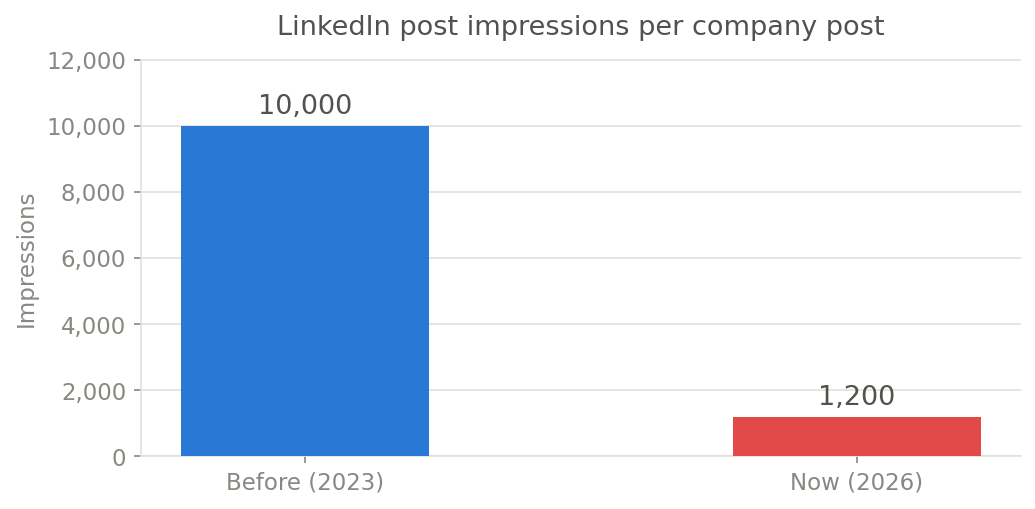
The numbers on organic social media are not ambiguous. LinkedIn organic reach for company pages dropped between 60% and 66% from 2024 into early 2026, the result of algorithm changes in late 2024 that shifted the platform from distributing content based on your network to distributing it based on topic interest. For a niche B2B vertical like private lending, where your entire addressable audience might be 40,000 people globally, that shift was crippling. Posts that used to reach 5,000 to 10,000 people are now pulling 800 to 1,200 impressions. The audience didn't shrink. The platform just stopped showing them your content.
LinkedIn organic reach for company posts: ~10,000 impressions in 2023, ~1,200 in 2026.
Facebook for business pages is in a similar position. Organic reach has sat below 5% for years, with some industry analyses putting the real number closer to 2%. That means if you have 10,000 followers, roughly 200 people see what you post. The platform hasn't been a viable organic channel for B2B since the mid-2010s, but firms kept posting anyway, and most still do.
The reason these channels collapsed isn't complicated. When every company on earth floods the same platforms with the same type of content, the platforms respond by throttling distribution and pushing brands toward paid. That's not a conspiracy. That's just the business model catching up with the marketing strategy everyone copied from everyone else.
Paid Ads: Paying More to Reach Less
If organic reach dying was the first problem, the rising cost of paid reach is the second. And they happened at the same time, which is what made the last two years so difficult for niche B2B marketers who were already operating with smaller budgets than their consumer brand counterparts.
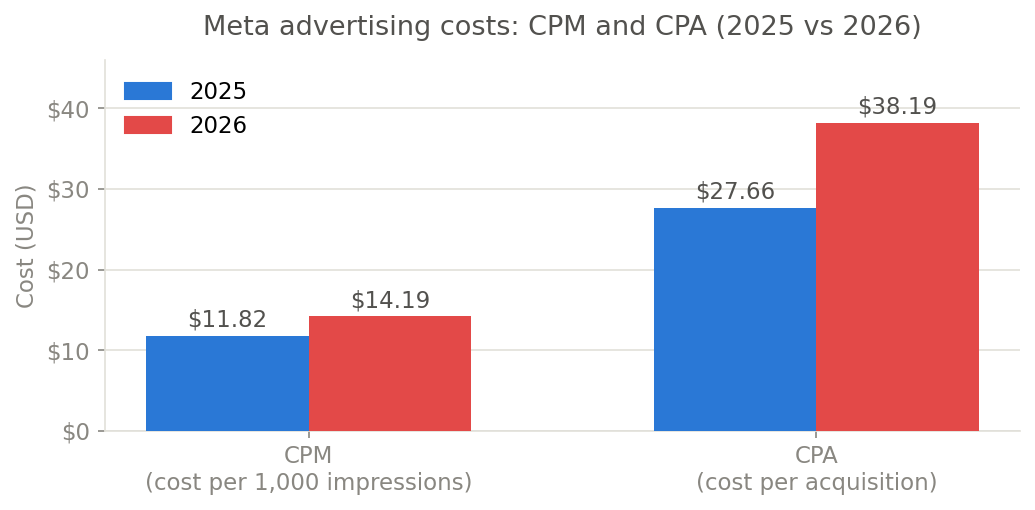
Average CPMs on Meta rose more than 20% from 2025 to 2026, climbing from $11.82 to $14.19. Cost per acquisition jumped 38% in the same window. For B2B advertisers on the platform, click-through rates average just 0.78%, well below the broader industry mean. Meanwhile, Meta now hosts 11.8 million active advertisers competing in the same auction. More bidders, higher floors, and a B2B audience that was never a great fit for the platform to begin with.
Meta advertising costs (CPM and CPA), 2025 vs. 2026. CPA up ~38% year over year.
LinkedIn's paid side is more relevant to our world, but it comes with its own issues. Cost per click on LinkedIn has climbed steadily and now sits among the highest of any major platform, routinely running $8 to $15 per click depending on your targeting. For a niche vertical targeting a small, specific professional audience, you're spending significant budget to reach the same few thousand people over and over again, most of whom have already seen your brand and decided what they think.
The advertising environment got more expensive because it got more crowded. Saturation drove costs up and returns down, and that was well underway before any new technology entered the picture.
Why It Happened When It Did
It's worth being honest about the timeline here, because the narrative that technology broke marketing gets the sequence backward.
These channels were already saturating by 2021 and 2022. The decline in organic reach on Facebook started years before that. LinkedIn's algorithm shift in 2024 was a reaction to a platform already drowning in low-quality brand content, not a cause of the problem. The cost increases in paid advertising reflect years of more brands pouring more budget into the same finite inventory.
AI-generated content has accelerated the volume problem in recent years, flooding feeds with even more material that looks and sounds like everything else. But the saturation that broke these channels was a human achievement. We did it with templated blog posts, recycled graphics, and the mistaken belief that showing up consistently on a platform was the same thing as being seen.
What This Means for the Private Lending Space
Niche B2B markets like ours face a specific version of this problem that consumer brands don't. Our audiences are small and identifiable, which should be an advantage. But it also means saturation hits harder and faster. When the same 40,000 people have seen the same 200 companies posting the same content for five years, the bar to actually get someone's attention is meaningfully higher than it was when these platforms were new.
The firms that pull ahead won't do so by finding a better template or a smarter ad configuration. They're going to do it by returning to something that predates all these platforms: direct, specific, valuable communication with the people they're actually trying to reach. Owned channels they control. Relationships that don't depend on an algorithm to exist. Ideas original enough that people share them because they're worth sharing.
The playbook that worked a decade ago isn't coming back. The CMOs and marketing leaders who recognize that early enough to build something different are the ones whose firms will have something to show for it. The ones still waiting for the platforms to fix themselves are going to keep paying more for less, and wondering why nothing is moving…well, there's your answer.
Brandwyn Boyle is Co-Founder of PLATFORM — the weekly editorial brief for private lending. Two decades in media, ads, PR, and tech across brands including Apple, T-Mobile, Motorola, Turner Broadcasting, ID Analytics, and Symantec.
Building something different?
Reach the private lending industry through PLATFORM
An owned editorial channel that puts your firm in front of the operators, investors, and capital allocators moving the industry — without begging an algorithm to show up.
The Economic & Housing Market Update — and what a Stech Family Office–style investor does about it.
By Dave Stech, Stech Family Office
Let me start by saying: I spent way too many years in corporate America.
And yeah, I was in senior leadership at places like Kodak and Disney…which had its perks. But I also had zero freedom.
And here's the part that hits a nerve for a lot of high-achieving professionals: my problem wasn't ignorance. It wasn't laziness. It was comfort. I was successful enough to stay where I was…but boxed in enough to hate it.
When I finally did leave, it was a clean break—except for one thing: I had to figure out what to do with my 401(k). A well-meaning friend referred me to his broker at Merrill Lynch and I transferred the whole six-figure sum.
I'll spare you the gory details. Let's just say I learned a lesson the hard way.
That's how I'll start today: one win, one lesson—because if you're reading this, you're probably someone who has achieved "success" inside someone else's system… and you're realizing the same thing I did:
You can't delegate your family's financial future to people for whom there's no downside. No consequences. You have to control it yourself.
A quick look back: why my State of the Union is worth your time
My first "State of the Union for Real Estate Investors" was at Harvard 21 years ago.
In 2005, I showed them my research and said, "Get out," and they basically laughed me out of the room.
In 2008 (after it turned out I was right) they invited me back and I told them, "I'm going ALL-IN in Vegas!"
In 2011, after Vegas became the #1 buy-market in the country, they asked me back again and I said: "Go ALL-IN everywhere!"
Those weren't guesses. They were cycle calls—based on the kind of market timing and macro pattern recognition that's been the backbone of how our family invests.
And somewhere in the middle of all that, something bigger happened: my sons joined me. We became the Stech Family Office. And now I get to do three things every day, with my sons: Make Money, Do Good, and Have Fun.
Not long ago, I was introduced at a conference as "the head of the most successful private lending family in America." I remember thinking, wow… look how far we've come in such a short period of time.
And then I had the sobering thought that frames this entire article:
What you don't know, your kids will inherit.
That's not a motivational quote. That's a generational law. So keep reading. :)
Part 1: The Economic Update
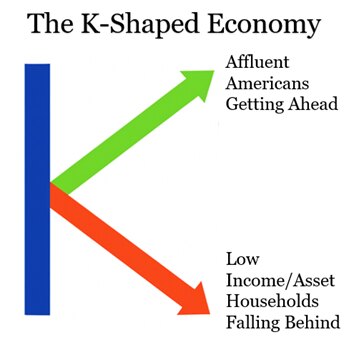
The "shape" of this economy isn't a single story
If you're waiting for the economy to feel like one coherent storyline again, you might want to grab some crossword puzzles or something. It's likely going to be a while.
Because this cycle isn't one wave. It's a set of lanes moving at different speeds… and the separation between those lanes is widening.
In other words, there's a strong argument the economy isn't simply "strong" or "weak." It's split.
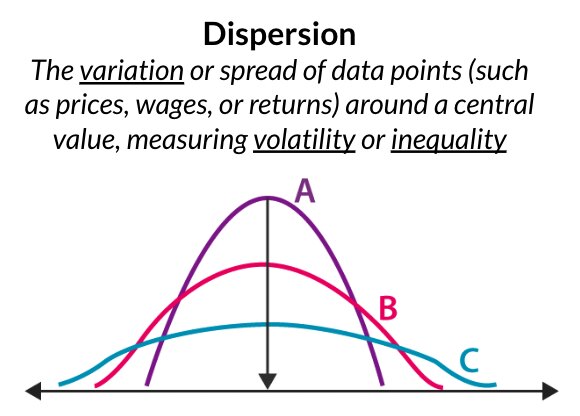
The technical word for the split: dispersion
In the same economy, outcomes can disperse. They spread out.
High dispersion = high variability
Low dispersion = high consistency
When dispersion is high, you get big gaps in outcomes across households, companies, and asset classes—all at the same time. In other words, a "K-shaped" economy.
And once you see that, you stop asking, "Is the economy good or bad?" (a low-resolution question). You start asking, "Which lane am I in—and what lane am I building my strategy for?"
The K-shaped economy is real (and it's not subtle)
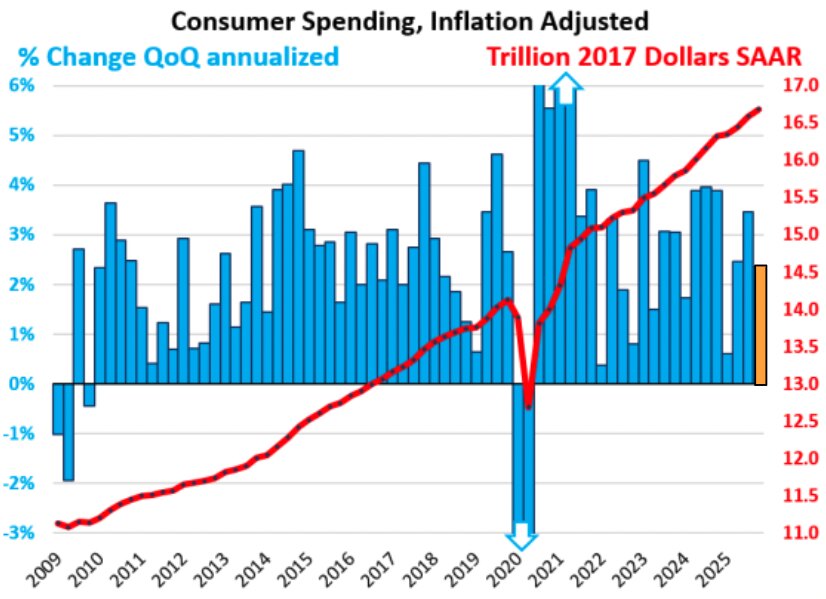
Look at consumer spending. In the aggregate, spending can look "fine," in the sense that it continues to stay positive quarter over quarter (as it did in Q1, in orange).
Source: WolfStreet
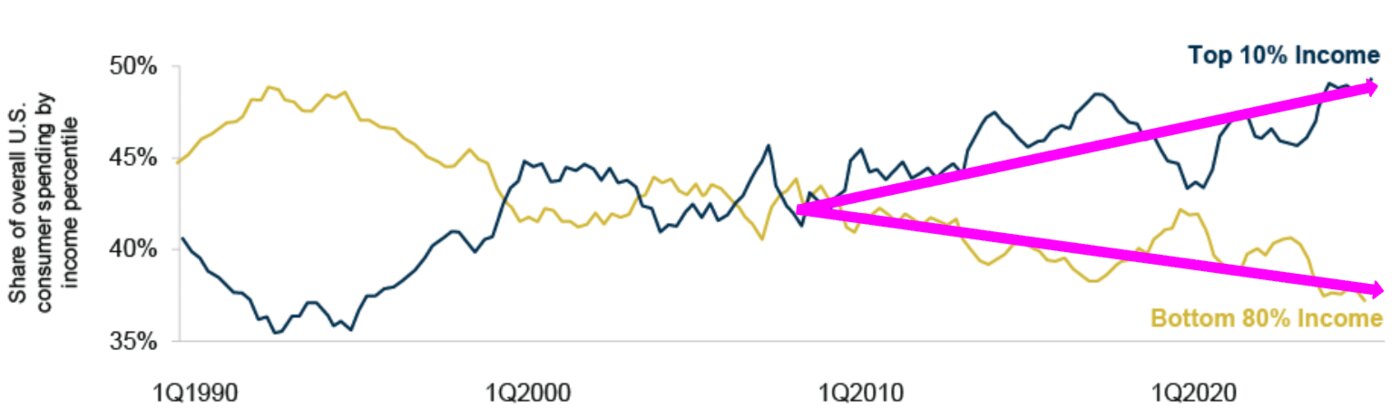
But underneath, you can see the K. A narrow cohort is carrying the load: the top 10%. The top 10% of income earners now account for 49% of all consumer spending.
Source: Oaktree Capital
And if you're a high-income professional, business owner, or investor… there's a good chance you're in that cohort. That's not a flex. It's a warning. Because it means:
one part of the economy continues to spend and invest,
while the broader population is increasingly forced into trade-offs.
The stock market is split too
You may own "500 stocks"… but your outcome is not diversified.
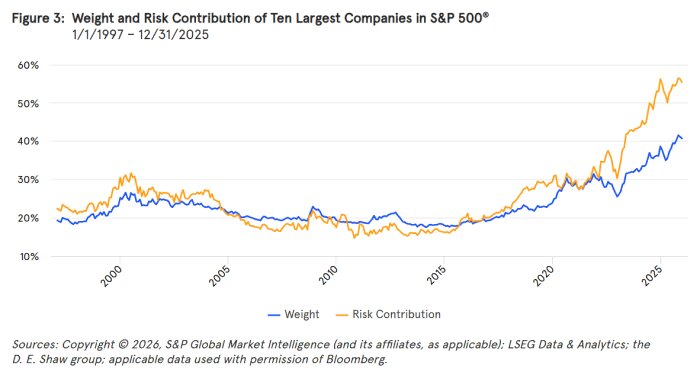
Most people look at the S&P and think: index = safety. But in a high-dispersion environment, even "the index" can become a concentrated bet.
As you can see here, market breadth is shrinking; the top 10 largest companies now make up 40% of the S&P's "weight" (in blue). And even more troubling, the top 10 make up 56% of its "risk contribution" (in orange) — meaning if the S&P moves tomorrow, more than half of that move is coming from the top 10.
When the market is cap-weighted and a handful of mega-caps keep getting bigger, you get what I call: the diversification illusion. You own 500 companies… but your outcome is increasingly dominated by the same crowded trade.
And the internal market math is screaming that reality:
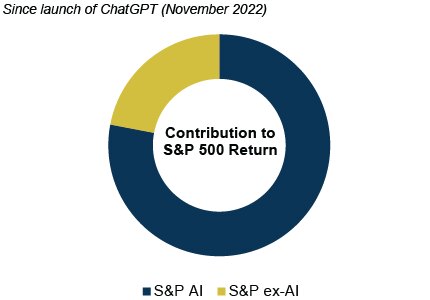
A small group of AI-related names has driven over 75% of overall returns since the launch of ChatGPT.
If you strip out the Information Technology sector (where companies like Nvidia, Microsoft and Apple reside) and Communication Services (home to Google and Meta), the S&P would have only returned 6% in 2025.
Source: Oaktree Capital
So the question isn't "Is the stock market up?" The question is: How much concentration risk are you pretending you don't have?
Because when leaders wobble, the entire index starts behaving like a single position.
The Fed is back… quietly
The "Sneaky Fed" and a new sheriff.
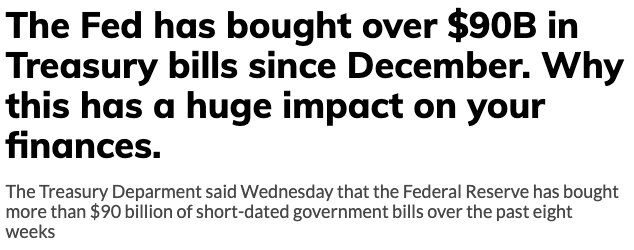
After nearly four well-publicized years of quantitative tightening, the Fed has been adding to the balance sheet again—quietly, steadily, and on purpose.
When they do this—when the Fed buys short-dated government debt and credits reserves back into the banking system—you can call it what it is: liquidity support. A form of quantitative easing… even if they don't shout it from the rooftops. They're trying to prop up markets (and GDP) without calling it stimulus.
Now here's the twist: the Fed is likely in for a shake-up here soon. The new Fed Chair—Kevin Warsh—is looking more hawkish, more interested in Fed independence, and more willing to keep interest rates high in the name of controlling inflation.
Whether or not you agree with any one political storyline, the investment takeaway is simple: Don't build your financial strategy on "the Fed will save us."
Historically, easing cycles take years to play out, and they're often messy—rates can go down, then back up, then down again. And even with cuts, you can still live in a world where money isn't "cheap," credit isn't "loose," and borrowers still pay up for speed and certainty.
Hope is not a strategy, as the saying goes.
The labor market: why the script isn't working this time
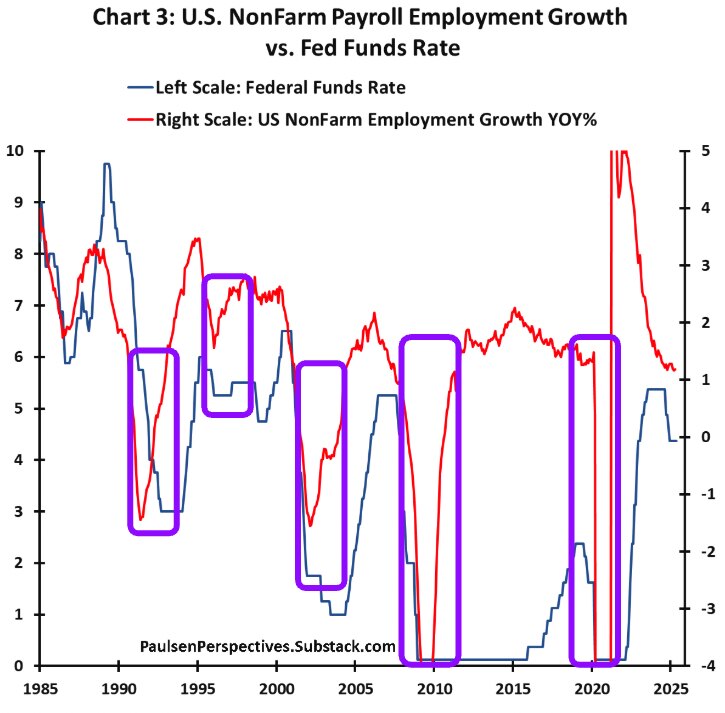
There's a simple mental model most people carry vis-à-vis interest-rate policy and the labor market:
That intuitive chain of cause-and-effect has basically held true for decades.
Which is exactly why this cycle is confusing everyone: the first part of the script happened… but not the latter.
Easing shows up first in financial conditions and market pricing. But the labor market only truly re-accelerates when employers regain hiring intent. And right now, that intent is not coming back the way the old model says it should.
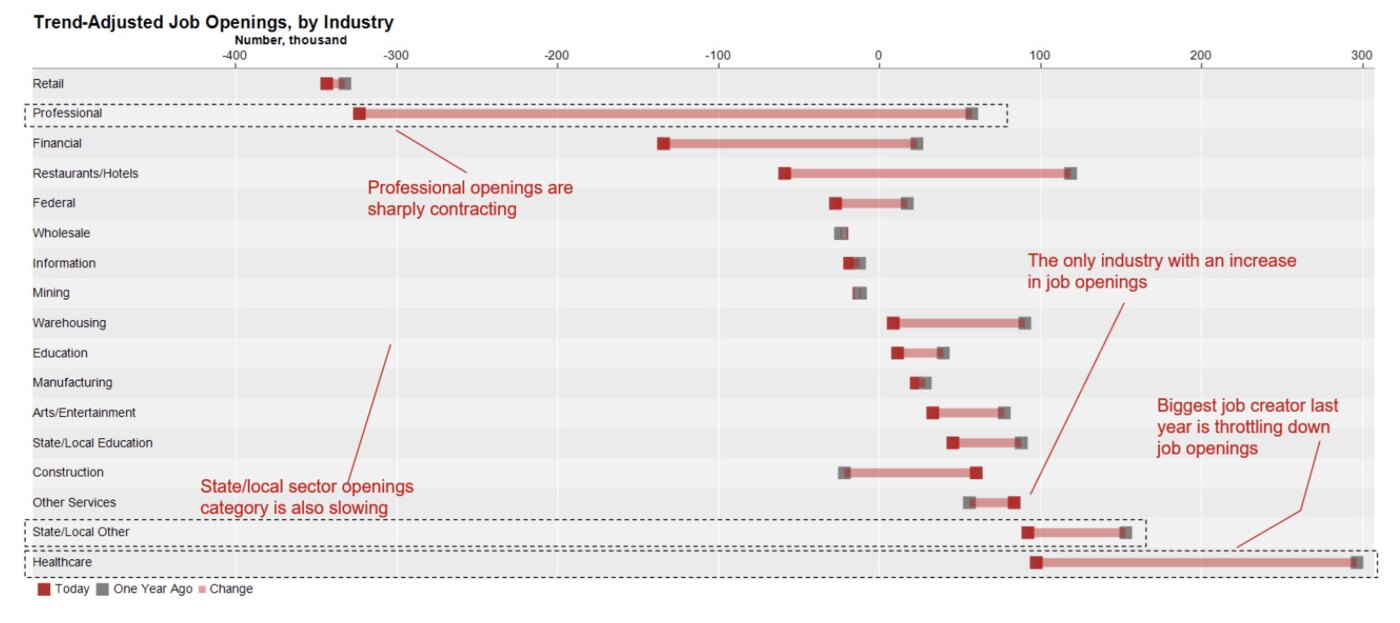
If we break it down by sector, on a "trend-adjusted" basis (i.e. a "difference from normal" basis)… job openings today are down compared to openings a year ago in 14 of the 17 major sectors.
Source: Mauldin Economics
Even the healthcare sector—responsible for ~53% of all hiring over the last few years—is throttling down job openings.
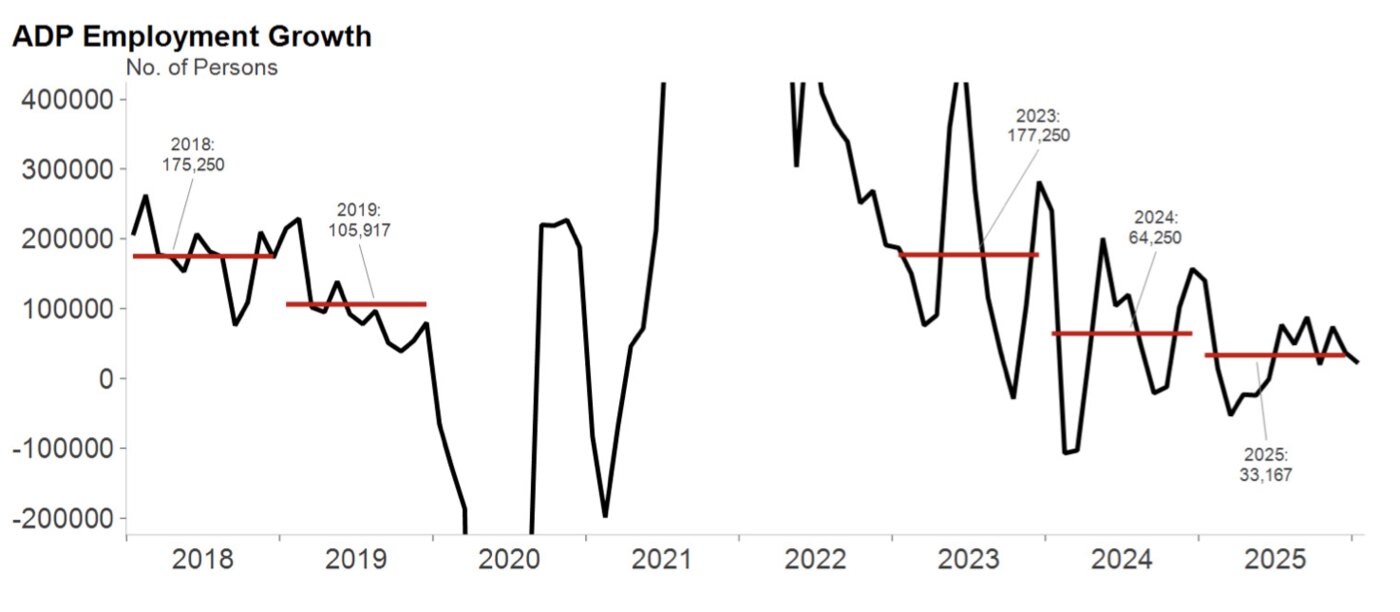
Bottom line: excluding the post-pandemic volatility years of 2020–2022… 2026 is shaping up to be the slowest year for job growth in a long time.
Source: Mauldin Economics
It's simple technical analysis: the averages step down from ~177K (2023) to ~64K (2024) to ~33K (2025). That is not "still strong, just cooling." It's now a different operating speed.
From a technical-analysis standpoint, once you're in a low-growth channel, you tend to stay there until something forces a reset.
Will more easing force a reset? Eventually, yes, it probably will. But only if the current low-growth channel is primarily a rate/credit-demand problem.
If it's a "structure" problem (i.e. an increasingly K-shaped economy where growth is concentrated, incremental spending goes to capex over headcount, and uncertainty keeps firms cautious), you can have plenty of easing and still not get the labor reset you're looking for.
Part 2: The Housing Market Update
Supply is rising… but the market found a "low-liquidity equilibrium"
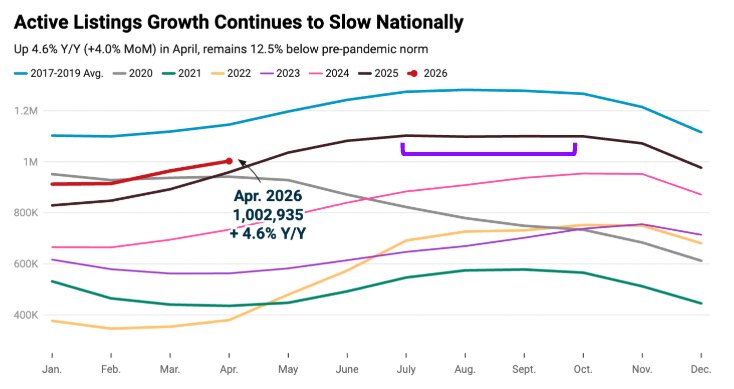
Inventory (active listings) has been growing—but the pace has cooled meaningfully. And then something unusual happened: active listings basically flattened for a long stretch in the back half of 2025.
Source: Realtor.com
That "flatline" is a clue. It's the market adapting. Not by blowing inventory out… but by shifting into what I call a low-liquidity equilibrium.
A low-liquidity equilibrium is when the market looks balanced on paper, but only because both sides are constrained—and nobody feels any urgency to blink.
Optional sellers throttle supply because they don't want to give up their mortgage rate (and then overpay for the next house at today's payment).
Buyers ration demand because the payment is punitive. They either can't afford it, or they refuse to.
So sales happen at the margins: concessions, price reductions, negotiation, and time—rather than through high transaction volume.
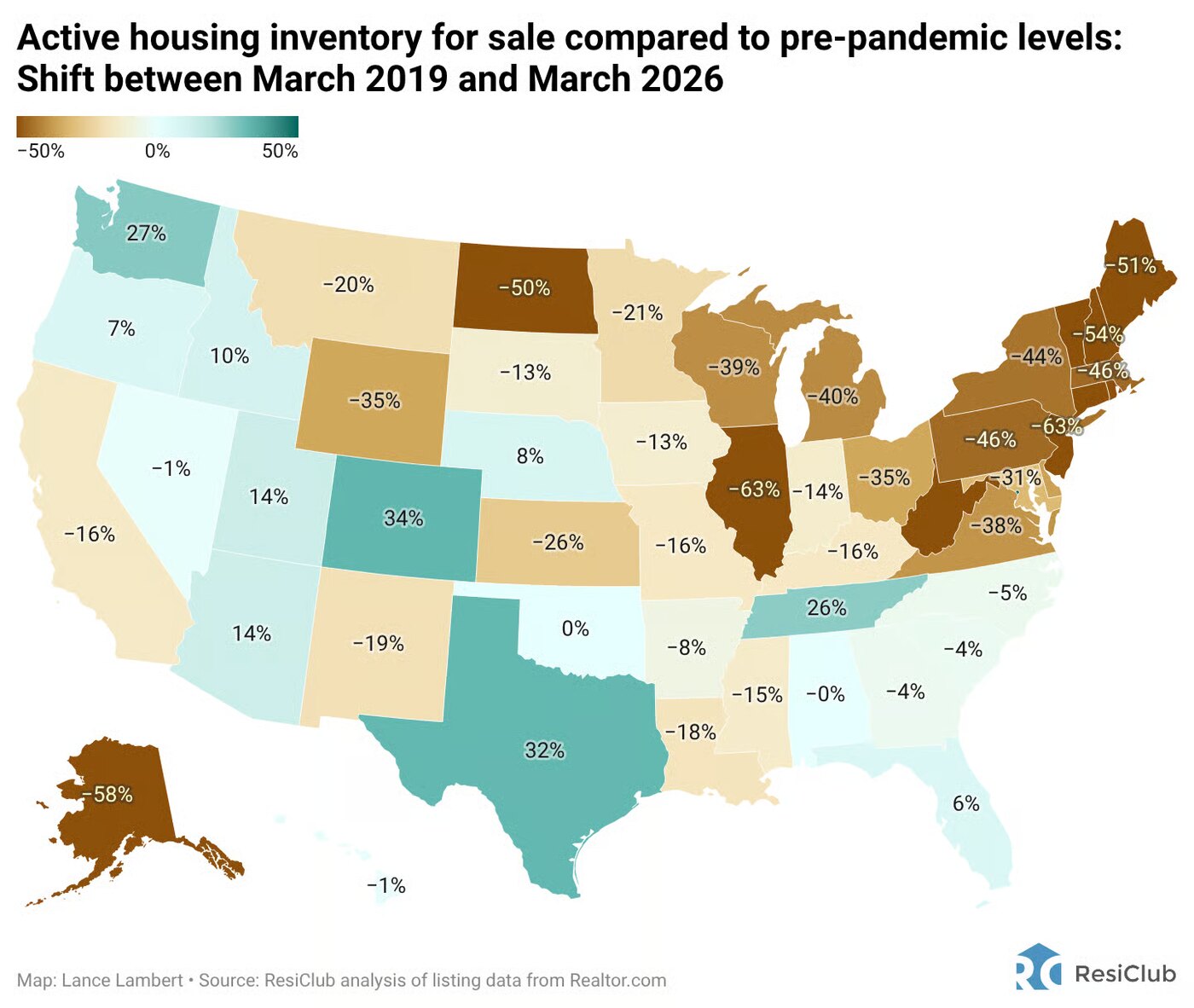
So yes, inventory is up. But remember, the market is rebuilding supply from a historically starved baseline.
Source: Resiclub Analytics
So two things can be true at once:
We can still be below pre-COVID inventory norms (as we are nationally, and in all the brownish states above),
But the market doesn't feel like a seller's market. It feels more like a buyer's market: low-intent, low-demand, and sluggish.
Demand is sending mixed signals: the funnel is leaking
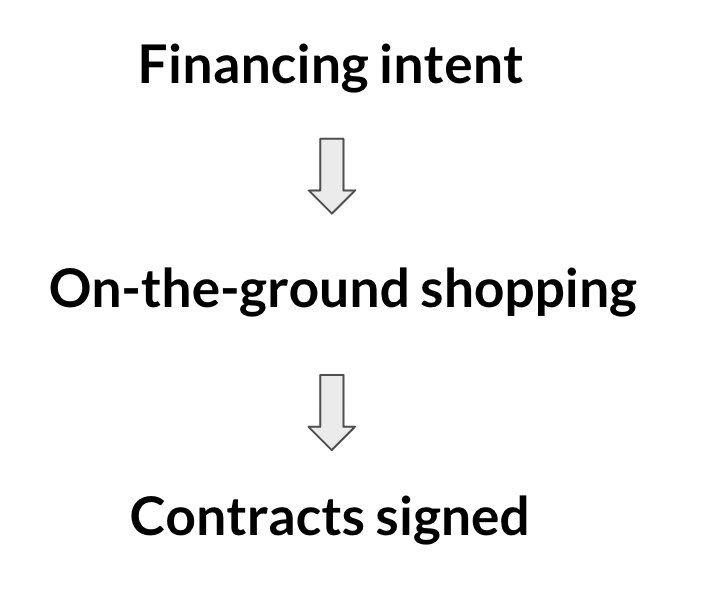
The housing demand "funnel" is not one number. It consists of three core stages, each with its own metrics.
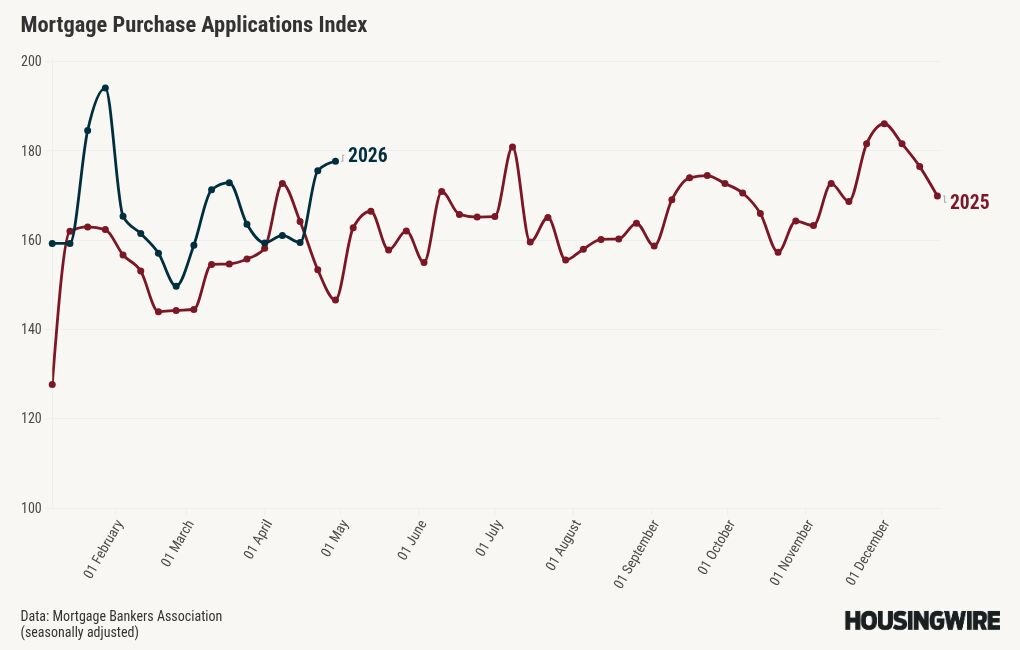
Financing intent (mortgage applications) typically improves when rates improve. And that's played out for most of 2026: applications have been mostly above the 2025 pace for most of the year.
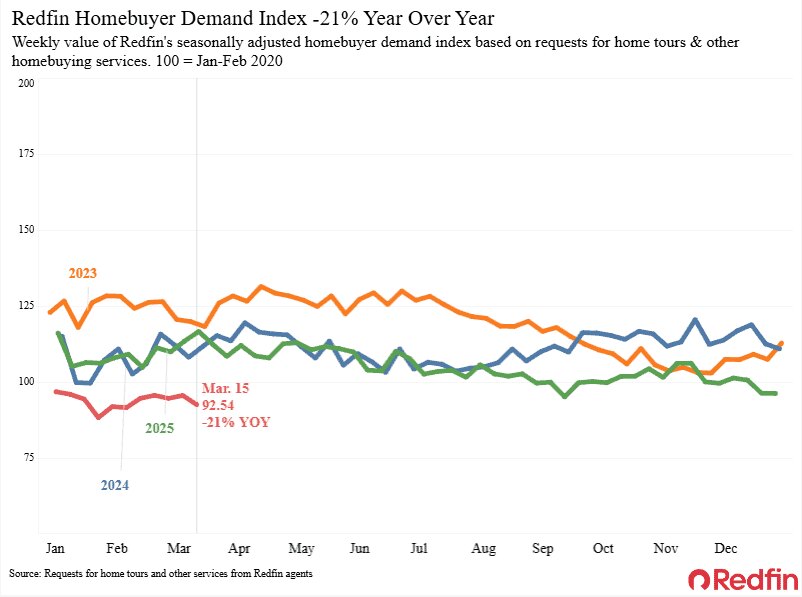
But "on-the-ground" shopping can stay weak because people run the payment math and bail. And that's what we've been seeing: Redfin's Homebuyer Demand Index—built off requests for tours and other homebuyer services—is down -21% YoY, which is as low as it's been at any point since COVID.
To be clear, these are people raising their hands, not just poking around online. As of mid-March, there are 21% fewer of them than there were when interest rates were ~100 bps higher.
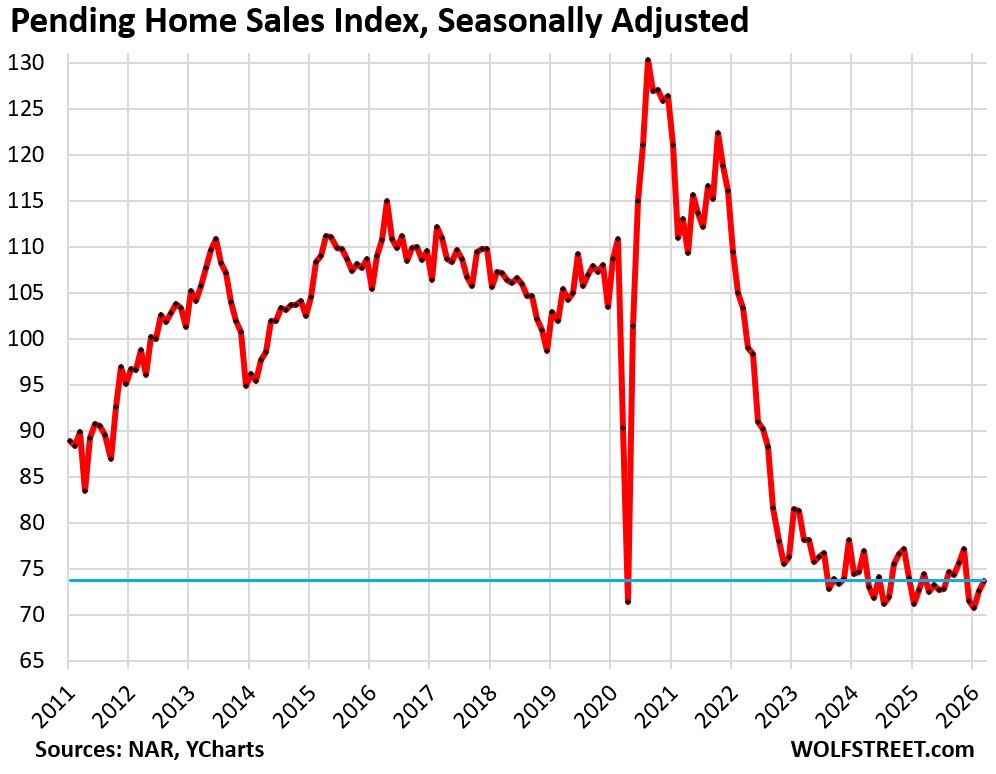
Signed contracts (pending sales) are the final piece of the demand funnel.
In a word, they're looking anemic—near record lows as of Q2'26. And the reason is pretty simple: sellers are anchored to yesterday's price, and buyers are more conditional.
So you end up with a market where more people re-enter at the top of the funnel, but fewer people make it through the bottom. That's not a booming market. That's a low-liquidity market.
Why flippers matter: they're the "edge indicator"
Fix-and-flippers represent a minority of total sales, but they matter because they're the definitional "marginal" participant.
They operate on:
thin time windows,
tight spreads,
and hard constraints.
They're forced to react faster than owner-occupants. So when you want to know where price discovery is heading, flippers are often the canary in the coal mine.
And the data tells an interesting story:
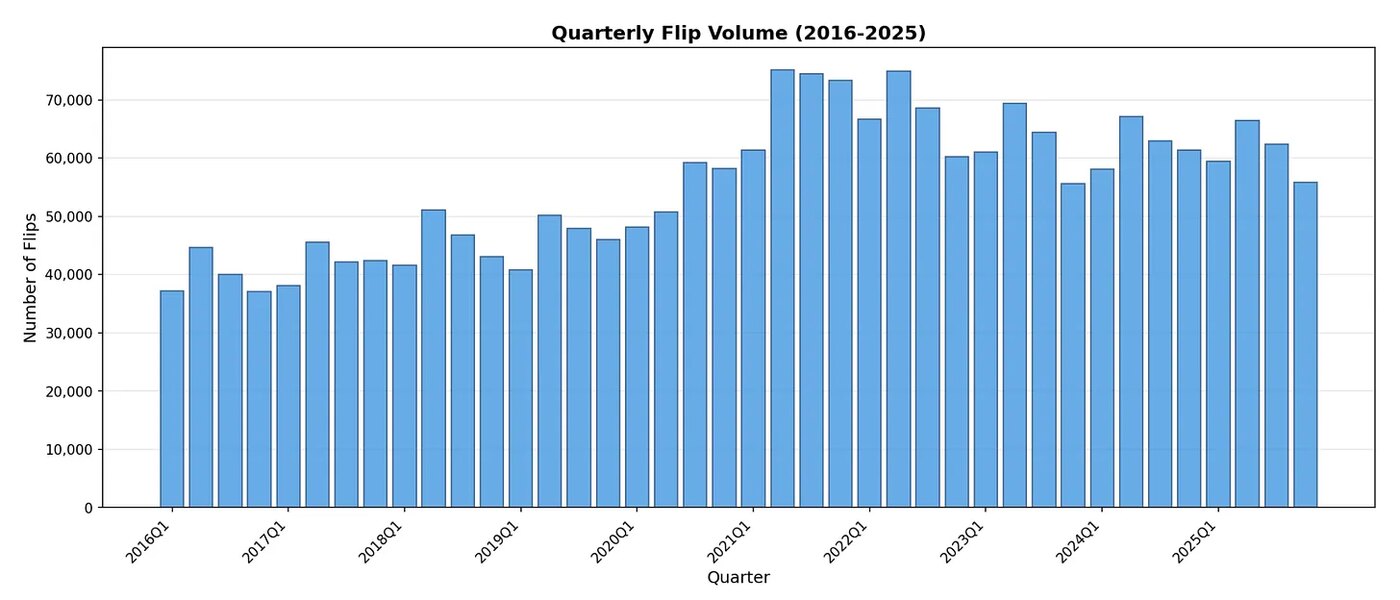
Flip volume has cooled from the peak but stabilized above pre-2020 baselines.
Source: SFR Analytics
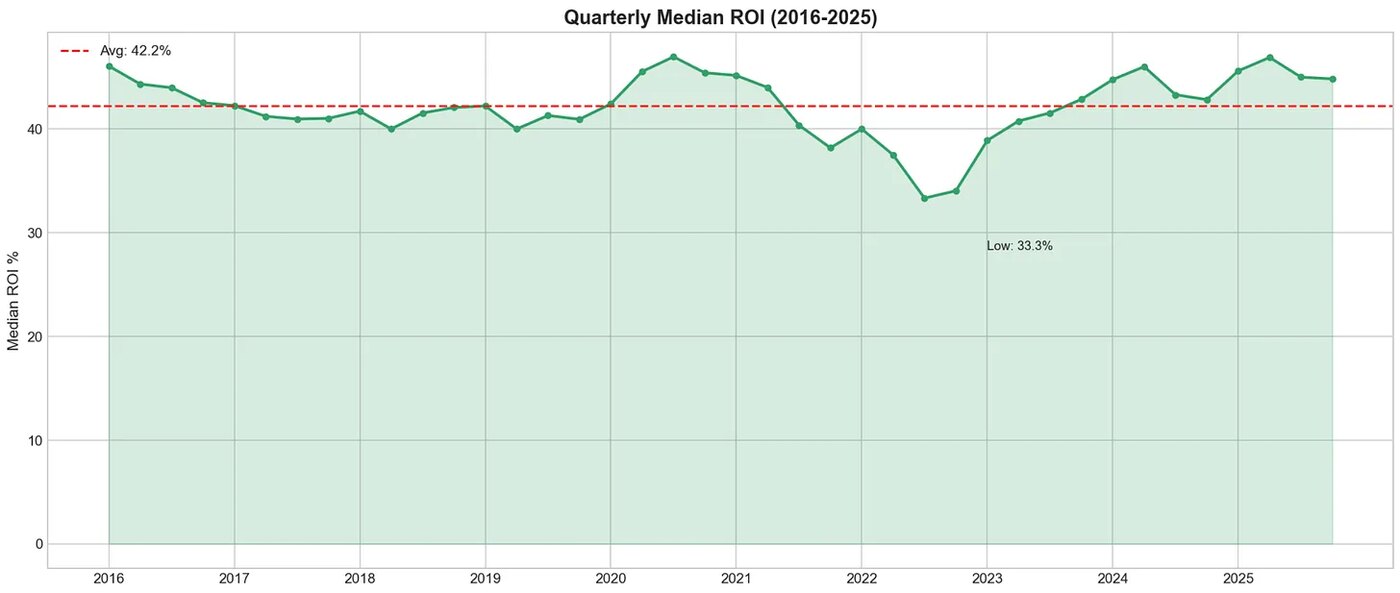
Gross ROIs have trended toward historic highs.
Source: SFR Analytics
Which sounds counterintuitive: how can flippers be profiting more in this tighter market? Well, you have to remember what flipping really is: it's a spread business.
When rates rise and the market gets choosy, a lot of amateur, "light-rehab" operators step back. That can reduce bidding pressure on the "ugly" inventory… where many of the true pros live.
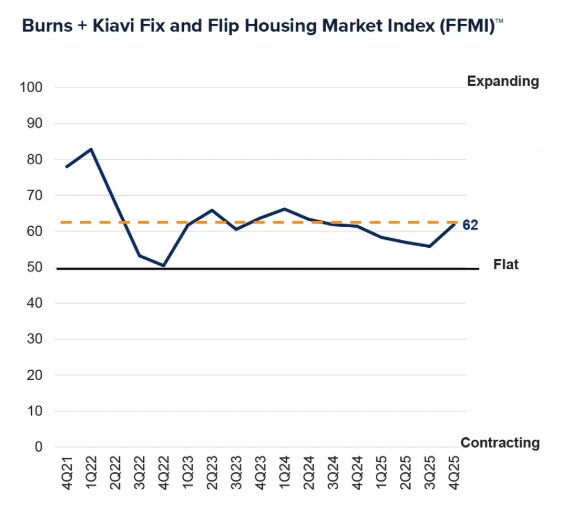
And sentiment among flippers improved toward the end of 2025, with many expecting to do more throughout 2026.
Source: JBREC
At an index score of 62, flippers are saying they're more optimistic about the market than they've been at any point in the last 6 quarters (since 3Q'24). In fact, this uptick is the largest quarter-over-quarter jump in 3 years.
As a private lender, that's music to my ears, because it signals something simple:
Active operators still need capital—and they'll pay for velocity and certainty.
The real conclusion: what do you do with this?
Let's cut through the noise. As an investor, there's one thing we can all agree on:
It is incumbent upon you to make the best risk-adjusted decisions you can at every point in the market cycle.
So ask yourself the question we ask ourselves:
What ONE passive investment strategy do you truly believe in right now? What asset class do you have real conviction will generate passive, recurring income with controlled risk in an overpriced, overheated, uncertain environment?
If you don't have that answer, that's not a character flaw. That's just information.
So let's talk about the options objectively:
Stocks? Uncertain—and increasingly concentrated.
"Alternative" assets you don't understand? If you don't control the outcome and you don't know who's pulling strings, you're effectively gambling.
Commercial / multifamily? There may be distress—but most people don't know what they're doing there, and the distress cycle isn't necessarily finished.
Single-family rentals near a market peak? The effort-to-return equation is worse than most people admit, and the old "rules" don't pencil the way they used to.
But there is one strategy that benefits from an environment where:
money isn't cheap,
underwriting is tighter,
and borrowers still need speed and certainty.
That strategy is private (hard money) lending.
Here's the principle
Smart real estate investors pivot throughout a market cycle to optimize risk-adjusted returns.
When the market is at or near peak conditions, we shift away from owning more long-term exposure… and toward controlling real estate short-term. Because when you control real estate rather than own it:
you reduce exposure to downside price risk,
you can still generate double-digit, passive, recurring income (often interest),
and you keep your capital liquid—ready to redeploy when a better opportunity presents itself.
And yes—there are always deals in every market. But in a market like this, great deals are needles buried in haystacks of risk.
So here's the better question:
Wouldn't it be better to find a haystack… where the needles come to you?
That's what being the bank is.
So what should you do next? (3 moves)
1) Make the economy your economy: win The Money Game
Your goal isn't to predict the next headline. Your goal is to build a personal system that does what our Family Office system does:
Generate cash (aka income),
Accumulate wealth (in the form of assets that both throw off cash AND go up in value),
Keep more of both (legally and intelligently, through vehicles like Self-Directed IRAs),
And steadily improve your effort-to-return ratio.
2) Go get the free library (and the advanced ebooks)
Go to justbethebank.com/vault for our Family Office's library of free resources, including three advanced ebooks I've written on private lending—over 100 pages of the most valuable, most ready-to-implement material I've ever put on paper. Yours, FREE.
3) Get on the Market & Investment Alerts list
If you want ongoing research, updates, and investor-grade market insights—get yourself added to the alerts list so you're not relying on the news cycle (or your broker's hot takes) to make decisions.
Dave Stech is the founder of the Stech Family Office and Just Be The Bank. To learn more, visit justbethebank.com.
Want more from Dave?
Visit Just Be The Bank
The Stech Family Office's home for private lending research, free ebooks, market alerts, and the live State-of-the-Union webinars Dave has been running for 21 years — from Harvard '05 to today.
What Happens After You Apply for a Residential Transition Loan (RTL)?
By Zach Curtis, Rehab Financial Group, LP
Today's real estate market is extremely competitive, and investors are motivated to move fast just as their capital needs to keep pace. When applying for a loan, borrowers tend to focus on matters such as rates, leverage, and loan terms. However, the subsequent application process is just as important as the terms themselves.
A lender's internal process ultimately determines the speed and efficiency in which it takes a deal to reach the closing table. At Rehab Financial Group (RFG), the post-application phase is structured with intention to reduce friction, minimize delays, and improve certainty of execution.
Part of RFG's purpose is to inform our investors, so they have a complete understanding of what happens behind the scenes. This has proven to aid in a positive experience as informed investors are better equipped to prepare documentation, respond quickly to requests, and stay ahead of deadlines.
Our fix-and-flip loan application method is designed to be a short, yet thorough evaluation, so borrowers can proceed with their projects as soon as possible.
Initial Review: Confirming Eligibility and Alignment
Once an application is submitted, the first step is a strategic review of the deal's core components. This analysis includes evaluating the property type, loan-to-value (LTV), projected after-repair value (ARV), the borrower's experience, and overall project feasibility.
This stage is about alignment between RFG and the borrower. We confirm that the deal fits within its lending guidelines, and both the borrower and us have our expectations clearly defined. When the opportunity meets our criteria, the borrower receives a Term Sheet, which outlines structure, pricing, and key requirements.
Our goal is to remain as transparent as possible to allow investors to move forward confidently, knowing their project has passed an initial eligibility review. While it may be tedious to gather additional information from the borrower, it's imperative we have as much information as we need to ensure all aspects of the loan are cleared to close.
Processing: Review and Services
Once the Term Sheet is completed, the file transitions into the processing stage. At this point, our focus shifts from qualification to verification. Our processors conduct a detailed review of the borrower's documentation, scope of work, budget, and application. Any missing items or inconsistencies are identified and resolved proactively.
Upon completion of that review, third-party services are ordered. Those services consist of an appraisal, feasibility study, and title work. These third-party services protect both the borrower and the lender. The appraisal validates the property's current and projected value, the feasibility study confirms the renovation plan and budget are realistic, and title work ensures clean ownership and clear transfer at closing. Together, they reduce risk and provide the confidence needed to fund the project responsibly.
Processing: Building a Complete Loan File
While awaiting the completion of the ordered services, we prioritize assembling a comprehensive and well-organized loan package first. This preparation significantly reduces downstream delays and unnecessary condition cycles.
For investors working within tight contract timelines, that preparation matters.
One-Touch Underwriting: Reducing Phone Tag
One of the most common sources of delay in real estate lending is repeated underwriting conditions — files unnecessarily going back and forth due to missing documentation or incomplete information.
We refer to this practice as "one-touch underwriting." Avoiding repetitive inquiries allows our team to center on submitting a fully vetted and complete file to underwriting the first time. We streamline the approval process and minimize surprises by gathering all required documents and services upfront.
What does this "complete package" look like? The borrower's completed file has all the necessary documents, services, and complete application — from there the file will be Approved, Denied, or, on rare occasion, sent back to client partners for clarification.
Losing a deal can mean losing months of opportunity in this competitive market. We are focused on giving the borrower fast service to ensure they are not losing out on any valuable time. Providing predictability becomes a significant advantage in the private lending industry.
Why Process Drives Performance
In real estate investing, timing is everything. A structured, proactive loan process — from initial eligibility review through one-touch underwriting — helps ensure that capital is delivered when opportunity demands it.
Competitive rates and strong leverage structures will always matter, regardless of the current market. However, the internal mechanics of a lender's process often determine whether a deal closes smoothly or becomes unnecessarily complicated.
Zach Curtis is with Rehab Financial Group, LP — a direct private lender specializing in financing for real estate investors nationwide.
About Rehab Financial Group
Learn more about Rehab Financial Group
A direct private lender specializing in financing for real estate investors nationwide — one-touch underwriting, transparent term sheets, on-time closings.